How Long Is The Blood of Dawnwalker?
Post-launch playtimes for The Blood of Dawnwalker run from 15 hours on a focused route to 100+ for completionists, with a normal first run near 50.
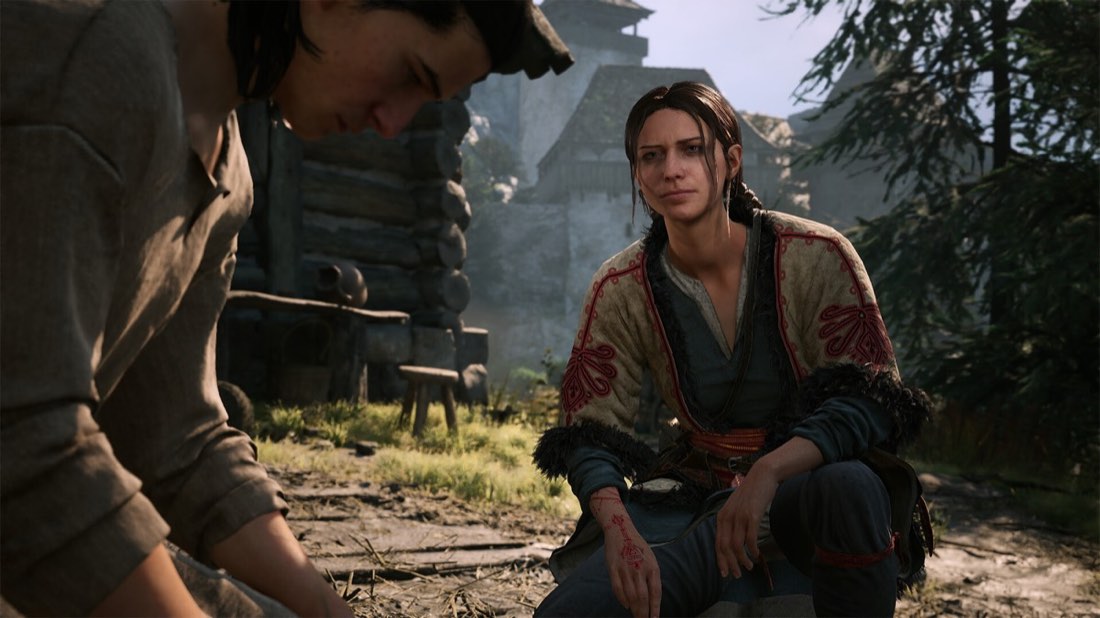
Image: Rebel Wolves / Bandai Namco Entertainment
The Blood of Dawnwalker released on September 3, 2026, and the measured answer is wider than any pre-launch estimate. A focused main-quest route rolls credits in around 15 hours. A normal first playthrough that actually engages with the Court and the companion questlines lands around 40–55 hours. Completionists report 100–120 hours — but that is a multi-playthrough number, not a single save.
The spread is real, not sloppy reporting, and the reason is the 30-day clock: this game’s length is spent, not elapsed.
The numbers, before and after launch
| Source | Estimate |
|---|---|
| Insider Gaming — Story difficulty, most side content | ~15 hours (credits on in-game day 20 of 30) |
| Insider Gaming — platinum, all endings, save-scumming | ~30 hours |
| TheGamer — main story | ~50 hours |
| TheGamer — completionist | 100–120 hours |
| Rebel Wolves internal playthroughs (pre-launch) | 50–70 hours, average ~50 |
| Push Square’s reported projection (pre-launch) | 55–70 hours |
| Original design target | ~40 hours |
The studio initially aimed for a tighter experience of roughly 40 hours — a deliberate contrast to bloated open-world runtimes — but internal playthroughs grew past that as the game came together. Director Konrad Tomaszkiewicz put it plainly: “when we started working, we planned it for 40 hours. Right now, the average is around 50 hours.”
The shipped game bears that out at the midpoint while stretching much further in both directions. One Insider Gaming writer finished on Story difficulty with most side missions, all mini-bosses and the full map done, and reached the credits on in-game day 20 of 30 — ten days unspent. A second Insider Gaming staffer took roughly 30 hours to reach platinum with every ending, using save reloads, and concluded the developer’s 40-hour average “might have been inflated, just a bit.”
Why the estimates disagree so wildly
Four shipped design decisions produce the spread:
- Time only passes on marked actions, so pacing is entirely player-set. Two people can play the same content in wildly different amounts of real time.
- Ending-related achievements are mutually exclusive and force reloads or replays.
- Even the prologue contains more quests than its time budget allows — and prologue side content vanishes permanently once the prologue ends.
- A “vengeance route” that kills NPCs is materially shorter than sparing them, because sparing generates extra companion conversations that themselves cost time.
Doesn’t the 30-day limit cap the length?
No — and the shipped game confirms it. The “30 days” are in-game time units, not real hours. A full run holds 480 segments: 30 days and 30 nights at 8 segments each, and segments are only consumed by clearly marked, hourglass-flagged actions like advancing quests or investigating leads. Free-roaming exploration, walking, fast travel and fighting the enemies that spawn in the world cost nothing — you can scout the entire map without spending a segment.
The few published costs are small but add up: repairing a broken wayside shrine is 1 segment (working shrines are plentiful and free), acquiring a new skill is typically 1 segment, and individual quests vary — at least one costs 9 segments, more than a full day or night. No complete cost table has been published anywhere; those four figures are the entire public record.
If you want the full mechanics, we’ve broken down how the time system works separately.
Completionist reality: one run can’t see everything
Rebel Wolves was explicit before launch that there is more content than the 30-day clock allows you to do, and creative director Mateusz Tomaszkiewicz put a number on it: the design target is a player seeing about 80% of the content before the clock expires. Roughly a fifth of the game is meant to be missed each run.
For trophy purposes, the shipped game has 47 trophies — 1 platinum, 3 gold, 5 silver, 38 bronze — which is the same set as the 46 Steam achievements announced pre-launch, since Steam has no platinum. Targets include reaching the level 50 cap and maxing the Infamy system.
Two things matter for anyone planning a long haul:
- One playthrough is enough for the platinum if you keep a manual save before the final quest and reload it after each ending. The game gives you 54 manual save slots; the most useful one is made immediately after clearing all three members of the Vrakhiri Court.
- There is no New Game+. Finishing the story unlocks no carry-over option — a second run is a clean save with no level, stats or Corruption retained. There is no post-game free roam either: reaching an ending returns you to the title screen. Replaying is entirely worthwhile, but it starts from zero.
How it stacks up against fall 2026
At roughly 50 hours for a typical single run, The Blood of Dawnwalker sits in classic big-RPG territory — shorter than a completionist Witcher 3 run, but a full-price length by any measure. The studio said in June 2026 that it had begun planning a roadmap of smaller free post-launch add-ons, Witcher 3-style, with no paid season pass; the patches shipped so far (1.0.2 and 1.0.3, on September 3 and 4) are hotfixes rather than content.
If you’re still choosing an edition, note that no edition added early access or extra story content — our editions guide has the full breakdown.
Frequently asked questions
How long does it take to beat The Blood of Dawnwalker?
A normal first playthrough that engages with the Court and companions lands around 40–55 hours. A focused main-quest run can roll credits in about 15 hours, and completionists report 100–120.
Does the 30-day time limit make the game short?
No. The 30 days are in-game time units consumed only by marked quest actions — confirmed as shipped. Free exploration, fast travel and world combat cost nothing, so real playtime isn't capped.
Is The Blood of Dawnwalker worth replaying?
There is deliberately more content than one 30-day run covers — the creative director's target was about 80% seen per run. But there is no New Game+: a second run starts from a clean save.
How does its length compare to The Witcher 3?
The studio originally targeted about 40 hours — a tighter experience than The Witcher 3 — and the shipped game's typical run lands near 50, with completionist figures of 100–120 hours.