Dawnwalker's 30-Day Time System Explained
How Dawnwalker's 30-day clock works in the shipped game: the 480 time segments, what actually spends them, what stays free, and what happens at day 30.
Image: Rebel Wolves / Bandai Namco Entertainment
A 60-hour open-world RPG with a 30-day time limit sounded like a contradiction — and before release it was the single most misunderstood thing about The Blood of Dawnwalker. The game launched on September 3, 2026, and the system shipped exactly as Rebel Wolves described it: time only moves when you take specific, clearly marked actions. Wandering the world, exploring ruins, fast travelling and managing your inventory cost nothing.
Here is how the clock actually works in the shipped game — including the handful of concrete segment costs anyone has published.
The basics: 30 days, 8 units each — 480 in total
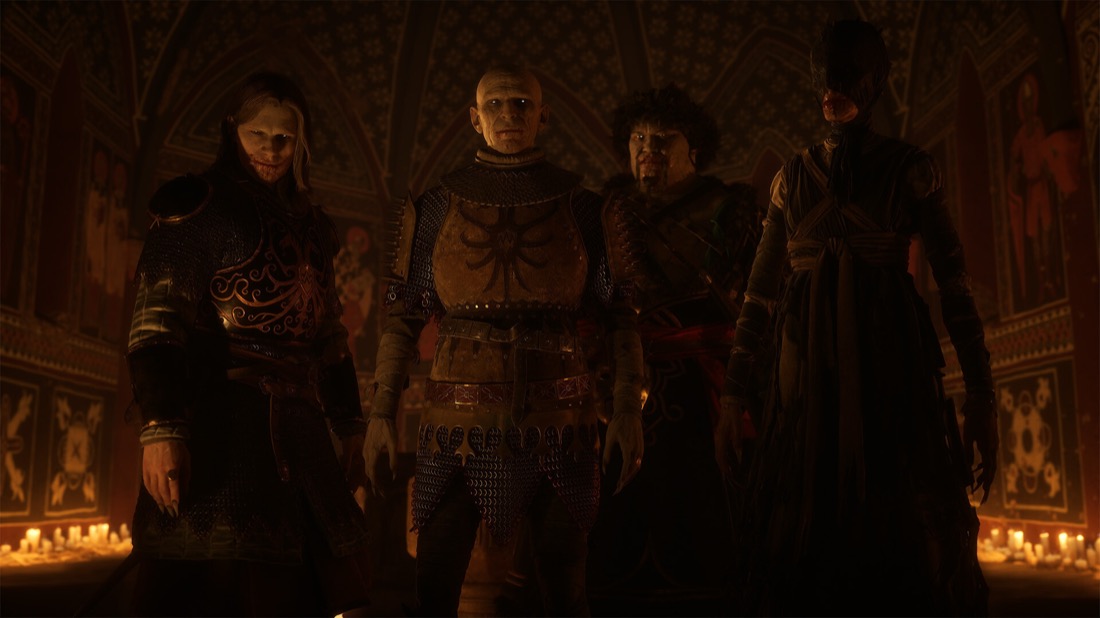
The story gives Coen 30 in-game days (and 30 nights) to save his family from the vampire lord Brencis. Each day and each night is divided into 8 time units, so a full run is a budget of 480 segments — that is the currency the game actually spends.
Crucially, this is not a real-time clock. Nothing drains while you walk around.
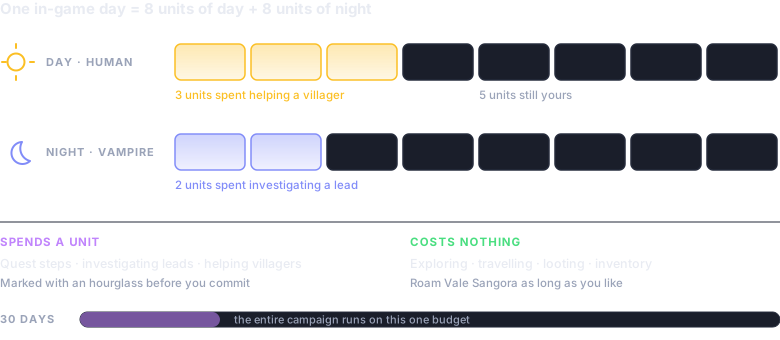
What consumes time — and what doesn’t
| Consumes time units | Free |
|---|---|
| Taking on / advancing quests | Free exploration and roaming |
| Investigating leads | Travelling the open world, fast travel included |
| Helping villagers | Fighting enemies that spawn in the world |
| Unlocking a new skill | Scouting Towers |
| Repairing a broken wayside shrine | Inventory management |
Time-consuming actions are clearly telegraphed with hourglass icons before you commit. You always know what a decision costs before you make it.
The one pre-launch surprise turned out to be true: Xbox Wire’s hands-on reported that skill-point assignments also consume time, and in the shipped game they do — roughly 1 segment per skill, on top of the skill point itself. Levelling up isn’t free, which turns character building into a scheduling decision.
The only segment costs anyone has published
There is still no complete table of every time-consuming action and its cost — not from Rebel Wolves, not from any guide site. Four concrete numbers exist, all from GamingBible’s post-launch tips piece:
- Repairing a broken wayside shrine — 1 segment. Skip it. Working shrines are plentiful and free.
- Acquiring a new skill — typically 1 segment.
- Individual quests — variable, and at least one costs 9 segments, more than a full day or night. Some quest costs can be reduced by starting them at the right time of day.
- Scouting Towers — free. Will-o’-the-wisps are free too, as long as you leave the wisp alone; the hunt itself costs time.
Anything beyond those four is an estimate, however confidently a site states it.
The design intent: tension, not punishment
Director Konrad Tomaszkiewicz framed the timer as a narrative device, not a difficulty mechanic:
“It adds to the non-linearity of the game, because you know the world is living and it’s not waiting for you — stuff will just happen.”
And on the fear of running out:
“You’ll be able to complete a majority of the game before the time runs out.”
The studio’s design phrase for the structure is a “narrative sandbox”: the line between main and side quests is deliberately blurred, and the world state changes as days pass. As one preview quoted the team: “We want players to think about time actively like a resource.”
Reviews bore that out. The game sits at 83 on Metacritic from 63 critics, and the time system is one of the near-universal praise points in both critic and player reviews — including from the outlets that scored the game lowest over enemy variety and technical roughness.
You cannot do everything — on purpose
The official Steam copy says it outright: “Choose carefully whom to help and whom to leave behind. You will not have time for everyone.”
Creative director Mateusz Tomaszkiewicz put a number on it: the design target is that a player sees about 80% of the content before the 30-day clock expires. The missing fifth is deliberate. Which villagers you help, which leads you chase, and which of the vampire lords’ territories you spend your nights in — those choices define your playthrough.
Two wrinkles the shipped game adds to that budget:
- There is no respec. Skill points cost time to spend and cannot be reset. Rebel Wolves have only said on Discord that Medics may offer a respec eventually; it is not in the game, and no arrival date is confirmed. A bad build is a bad build for the rest of that run.
- Prologue content is permanently missable. The prologue has its own time budget, cannot be fully cleared, and its side content disappears the moment the prologue ends.
What happens at day 30?
This one is now answered. Exceeding 30 in-game days gives you the “Time Runs Out” ending: your family is sacrificed. But running out of time shifts the goal rather than ending the game — PowerPyx notes you can still free-roam on that save afterwards. What you forfeit is the “In the Nick of Time” gold trophy, which requires completing the story and rescuing your family inside the 30-day limit with one of the four main endings.
The playtest anecdote that circulated before release — a player defeating the prologue boss duel that is designed to be unwinnable, and the credits rolling — is a real, shipped feature. Beating Brencis during the prologue quest “Bad Blood” is a listed secret ending, and the one ending no post-prologue save can reach.
One planning note that matters more than the clock itself: there is no New Game Plus, and no post-game free roam. Reaching an ending returns you to the title screen, and a fresh run starts from a clean save with no level, stats or Corruption carried over. If you want to see more than one ending, make a manual save after clearing all three Vrakhiri boyars and reload it — the game gives you 54 manual save slots.
Practical takeaways
- Don’t rush. Exploration, fast travel and world combat are all free — the game wants you to scout before you commit segments.
- Read the hourglass. Every time cost is shown up front; there are no hidden drains.
- Don’t repair shrines, and don’t buy skills you won’t use. Those are the two documented easy wastes, and with no respec the second one is permanent.
- Accept missing content. Roughly 20% of the game is designed to be missed per run.
- Ignore any single playtime number. Real results ranged wildly: one Insider Gaming writer rolled credits on in-game day 20 of 30 after about 15 hours, a colleague hit platinum in around 30, and TheGamer puts a normal main-story run near 50 hours with completionist runs at 100–120. The developers’ own average was ~50. The 30-day limit constrains the story calendar, not your real-world hours.
That last point deserves its own page — see how long The Blood of Dawnwalker actually is for the full breakdown. For how the time system fits into the wider game, read everything we know, and check the release date guide for launch details.
Frequently asked questions
Does The Blood of Dawnwalker have a time limit?
Yes — the story gives Coen 30 in-game days to save his family. But time only advances when you take clearly telegraphed actions like starting quests or investigating leads, never during free exploration.
Does exploring consume time in The Blood of Dawnwalker?
No. Free exploration, roaming the world, fast travel, fighting enemies that spawn in the world and inventory management do not consume time. Only actions marked with hourglass icons — quests, leads, helping villagers, unlocking skills — spend time units.
What happens when the 30 days run out?
You get the 'Time Runs Out' ending and your family is sacrificed, but the game does not stop — PowerPyx notes you can still free-roam afterwards. What you forfeit is the 'In the Nick of Time' trophy for rescuing them inside the 30 days.
Can you do everything in one playthrough?
No — by design. The creative director's stated target is that a player sees about 80% of the content before the clock expires, so choosing whom to help is part of the role-playing. There is no New Game Plus, so a second run starts from a clean save.