Halloween: The Game PC Requirements & Online Needs
Steam's minimum and recommended specs for Halloween: The Game — 45 GB, SSD required, Windows 11 at both tiers — plus how it actually runs since launch.

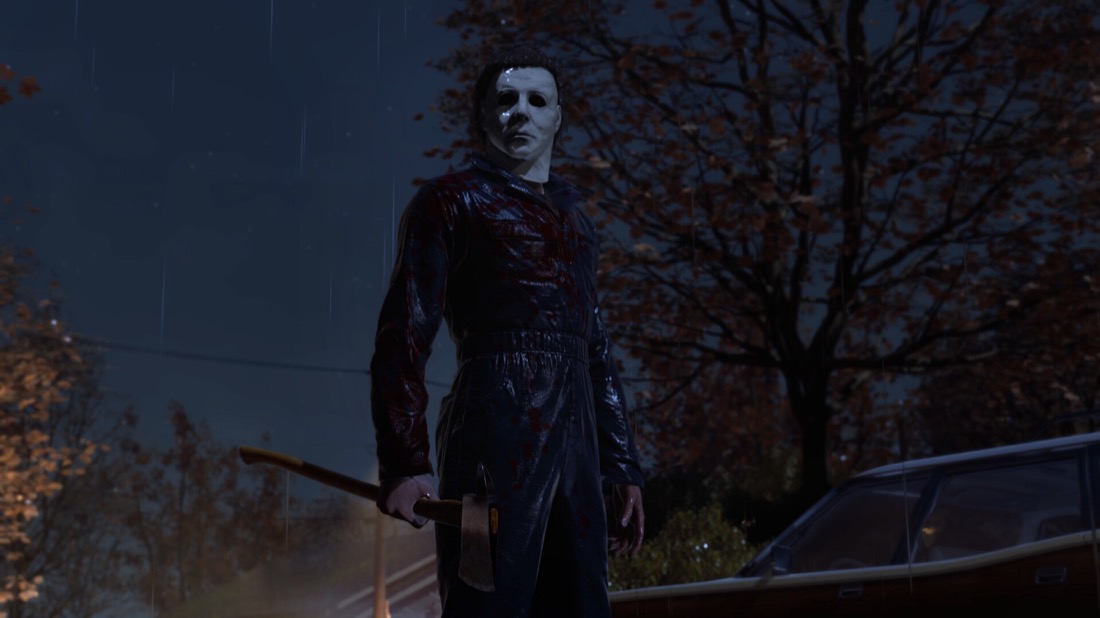
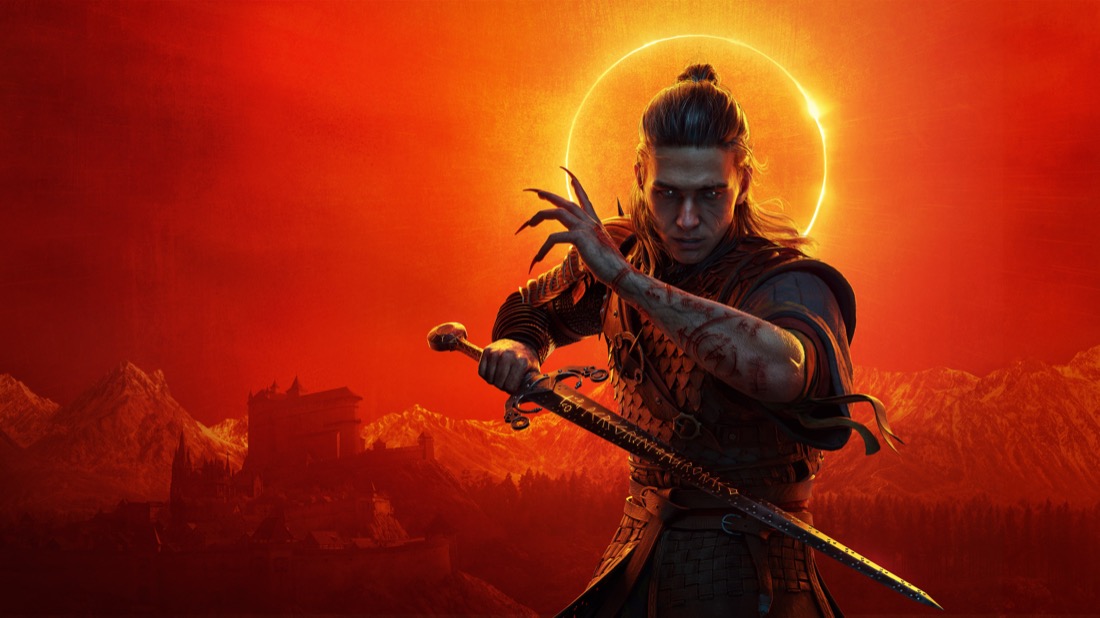
Image: IllFonic
Halloween: The Game asks for Windows 11 64-bit, 16 GB of RAM, DirectX 12, a broadband internet connection and 45 GB on an SSD or NVMe drive at the minimum tier. The recommended tier doubles the RAM to 32 GB and moves to an RTX 3000 or RX 7000 series card — and, unusually, it targets 4K at 30fps rather than a higher frame rate.
The game is out now — it released on September 8, 2026 — so alongside the published spec set this page also covers the frame-rate oddity that trips people up, how the shipped build actually behaves on PC, and what that “Broadband Internet connection” line turned out to mean for playing solo.
The published Steam requirements
These are the two tiers exactly as IllFonic lists them on Steam. Both tiers open with the same note: “Requires a 64-bit processor and operating system.”
| Minimum | Recommended | |
|---|---|---|
| OS | Windows 11 64-bit | Windows 11 64-bit |
| Processor | Intel LGA 1200+ / AMD AM4+ | Intel LGA 1700+ / AMD AM5+ |
| Memory | 16 GB RAM | 32 GB RAM |
| Graphics | GTX 1660+ / RX 590+ / Arc A770+ (1080p@30fps) | RTX 3000 series / RX 7000 series (4k@30fps) |
| DirectX | Version 12 | Version 12 |
| Network | Broadband Internet connection | Broadband Internet connection |
| Storage | 45 GB available space | 45 GB available space |
| Additional Notes | SSD/NVME Required | SSD/NVME Required |
That is still the complete published spec set, re-checked on September 9, 2026. Launch did not bring an expanded sheet — no 1440p tier, no 4K/60 tier, no ray-tracing or VRAM breakdown. The game runs on Unreal Engine 5, and specs have only ever been published on Steam; the Epic Games Store is the other PC storefront, but no separate spec sheet exists for it.
The 4K@30 oddity: there is no 60fps PC target
This is the part that trips people up. Conventionally a recommended tier means “the same resolution, but smooth” — 1080p60 where the minimum was 1080p30. Halloween: The Game does not do that. The minimum tier is annotated (1080p@30fps) and the recommended tier is annotated (4k@30fps). Both quote 30fps. The upgrade you’re buying with an RTX 3000-class card is four times the pixels at the same frame rate.
We’re recording this as published rather than trying to explain it away. IllFonic has published no 60fps PC target at any tier, and the phrasing on the store page is unambiguous about the 30fps figure appearing twice.
Two related things worth flagging:
- The only 60fps claim anywhere in first-party material is on Xbox. The Xbox Series X|S store listing carries a “60 fps+” capability badge alongside “4K Ultra HD” and “HDR10”. That badge sits next to PC specs that only ever quote 30fps. It’s a storefront capability tag, not a verified performance mode, and no first-party source reconciles it with the PC figures.
- Whether the PC targets assume upscaling was never stated. No DLSS, FSR, XeSS or frame-generation mention appears at either tier, and no note says the targets are native. That gap was never filled — though, as below, the shipped game does have FSR in its graphics menu.
If you were planning your build around a 1080p/60 assumption, don’t. Nothing published supports it, and neither does the shipped build.
What the shipped PC build actually does
The specs above are still the only ones IllFonic has published, but the game is out, and a few things that were unanswerable in August now have answers.
The graphics menu contains more than the spec sheet implies. The shipped build exposes a ray tracing toggle, motion blur, and FSR — including FSR Frame Generation — none of which appear anywhere in the Steam requirements. That doesn’t retroactively tell you whether the 1080p@30 and 4K@30 targets assumed upscaling; IllFonic still hasn’t said. It does mean upscaling is available to you either way.
Above 60fps, the current build stutters rather than smooths. Post-launch testing found that pushing past 60 tends to introduce stutter instead of smoother motion, which is why the standing advice is to cap the frame rate at 60. Set against the 30fps spec targets, treat 60 as the practical ceiling on this build rather than a number to chase.
A settings starting point, if you want one — this comes from post-launch testing dated September 7, 2026, not from IllFonic: native resolution, a 60 FPS cap, motion blur and ray tracing off; Effects, Foliage, Shading, Shadow, Global Illumination and Reflection on Low; Texture, View Distance, Post-Process and Anti-Aliasing on Medium. Shadow, Foliage and Global Illumination are named as the heaviest remaining options. Leave FSR off for sharpness if you can afford to and set it to Performance if you can’t — but leave FSR Frame Generation disabled, since generated frames add latency and visual artifacts in a stealth game.
Crashes were the headline launch problem, and one hotfix has landed. Reviewers on the Advance Access build logged crashes and character freezes. IllFonic’s Early Access Hotfix 1, released September 5 across all platforms, led with “Numerous Crash Fixes” and said the studio was “currently working on a bigger patch that addresses many issues and concerns that are being reported from the playerbase.” A day-one patch was pre-announced for September 8, but no day-one patch notes had been published on the official news page as of September 9.
Your CPU requirement is a socket, not a chip
The processor rows are the other thing that reads oddly: Intel LGA 1200+ / AMD AM4+ for minimum, Intel LGA 1700+ / AMD AM5+ for recommended. Those are motherboard socket families, not CPU models. IllFonic has named no specific processor at either tier.
That’s a platform-generation floor rather than a performance floor, and the gap inside it is enormous. An LGA 1200 Pentium and an LGA 1200 Core i9-11900K both technically satisfy “minimum.” Practically, treat the socket line as “your platform is recent enough” and not as any kind of performance guarantee — and don’t trust spec-comparison sites that fill in model numbers, because there are none to fill in.
Storage, OS and the SSD rule
45 GB at both tiers, and the drive has to be solid state. “SSD/NVME Required” appears in the Additional Notes at both minimum and recommended — this is a hard requirement, not a suggestion. A mechanical hard drive isn’t an option here.
Windows 11 64-bit is listed at both tiers, and Windows 10 does not appear anywhere in the requirements. IllFonic hasn’t published a statement excluding Windows 10 in so many words; it simply isn’t in the spec sheet.
For comparison, Xbox publishes an approximate console install size of 39,852,052,480 bytes — roughly 39.85 GB — for the base game. PlayStation lists no download size at all.
“Broadband Internet connection” — so can you play offline?
The broadband line appears in the specs themselves, at both tiers, which is what made this worth asking about the PC version. Here’s where it landed: an Offline Play mode did ship, but IllFonic has still never published a plain statement about what it covers.
What is actually confirmed:
- A standalone single-player campaign exists. Steam’s own copy calls it “Singleplayer Slashing” and describes a standalone singleplayer story following the events of “The Night He Came Home” through Michael Myers’ eyes. Steam’s category list includes “Single-player” alongside the online tags, and Xbox’s capability list includes “Single player.”
- “Offline Play” is a named mode in the shipped game, confirmed by IllFonic’s own patch notes. Early Access Hotfix 1 on September 5, 2026 lists “Fixed an issue where Offline Play was affected by the login queueing system.” That’s indirect, but it is first-party and it names the mode by title. What IllFonic has never done is publish a sentence describing what Offline Play includes or whether the campaign runs with no connection at all.
- PlayStation’s listing points toward offline solo play working. The PS Store US listing carries “Online play optional” and a player count of 1, while also noting “PS Plus required for online play.” That’s suggestive, but it’s a storefront metadata field, not a design statement.
The bots question
Before launch, offline bot matches were a secondary preview report rather than a confirmed feature. They are real. IllFonic announced private matches against AI, and the Offline Play fix above is first-party evidence that an offline mode shipped.
What is still undocumented is everything practical about it: the menu path to private AI matches, bot counts and difficulty options, which side can be AI-controlled, and whether bot matches award XP or progression at all. The one adjacent first-party data point is IllFonic’s statement that XP is earned “by completing matches or enjoying the singleplayer story mode” — that confirms campaign XP, not bot-match XP, and shouldn’t be stretched into one.
For online play proper, the format is 1v4 asymmetrical — up to five players in a lobby, one as Michael Myers and up to four as Heroes of Haddonfield.
Still unpublished for PC
Checked again on September 9, 2026, the day after wide launch:
| Question | Status |
|---|---|
| Steam Deck verification | Still not published — the game shipped without one |
| Denuvo or any third-party DRM | Still not published |
| Anti-cheat middleware | Still not published |
| Preload date, time or size | Never published on any storefront, and the game is now out — this one is closed rather than pending |
| Whether spec targets assume upscaling | Never stated, though FSR does exist in the shipped build |
| Server model, matchmaking, region locking | Still not published |
| Cross-save / cross-progression | Still not listed anywhere |
Cross-play is confirmed from Microsoft’s side only — Xbox’s capability list includes “Xbox cross-platform multiplayer” and “Xbox cross-platform co-op” — but no first-party page states the full matrix, including whether Steam and Epic players pool together.
Steam’s own feature list for the PC version does confirm Steam Achievements, full controller support, DualShock and DualSense controller support, Steam Cloud and Family Sharing.
Halloween: The Game released on September 8, 2026 on Steam and the Epic Games Store, with Digital Deluxe buyers getting in four days early on September 4 at 9 AM PT.
Frequently asked questions
What are the minimum PC requirements for Halloween: The Game?
Windows 11 64-bit, an Intel LGA 1200+ or AMD AM4+ platform, 16 GB RAM, a GTX 1660+ / RX 590+ / Arc A770+ GPU, DirectX 12, a broadband connection and 45 GB on an SSD or NVMe drive. Steam lists that minimum tier as targeting 1080p at 30fps.
Do the recommended specs get you 1080p at 60fps?
No. Steam's recommended tier is labeled 4k@30fps, not 1080p@60, and IllFonic has never published a 60fps PC target at any tier. Post-launch testing also found that pushing the current build above 60fps introduces stutter rather than smoother motion, so 60 is the practical ceiling.
Does Halloween: The Game need an internet connection on PC?
Both Steam tiers still list 'Network: Broadband Internet connection' as a requirement, but an Offline Play mode did ship — IllFonic's own Early Access Hotfix 1 notes on September 5, 2026 fix 'an issue where Offline Play was affected by the login queueing system.' IllFonic has still never published a statement spelling out exactly what Offline Play covers.
How much storage does Halloween: The Game need on PC?
45 GB of available space at both the minimum and recommended tiers, and it must be on an SSD or NVMe drive — Steam's additional notes read 'SSD/NVME Required' at both tiers.
Does Halloween: The Game run on Windows 10 or Steam Deck?
Windows 10 is not listed anywhere in the requirements; both tiers say Windows 11 64-bit. Steam Deck verification status still has not been published, checked again on September 9, 2026 — the game shipped without one.