Onimusha: Way of the Sword — Everything We Know
Out now: how it reviewed, real playtime, Issen, editions, PC specs and Switch 2 performance — the full picture on Capcom's first Onimusha in 20 years.
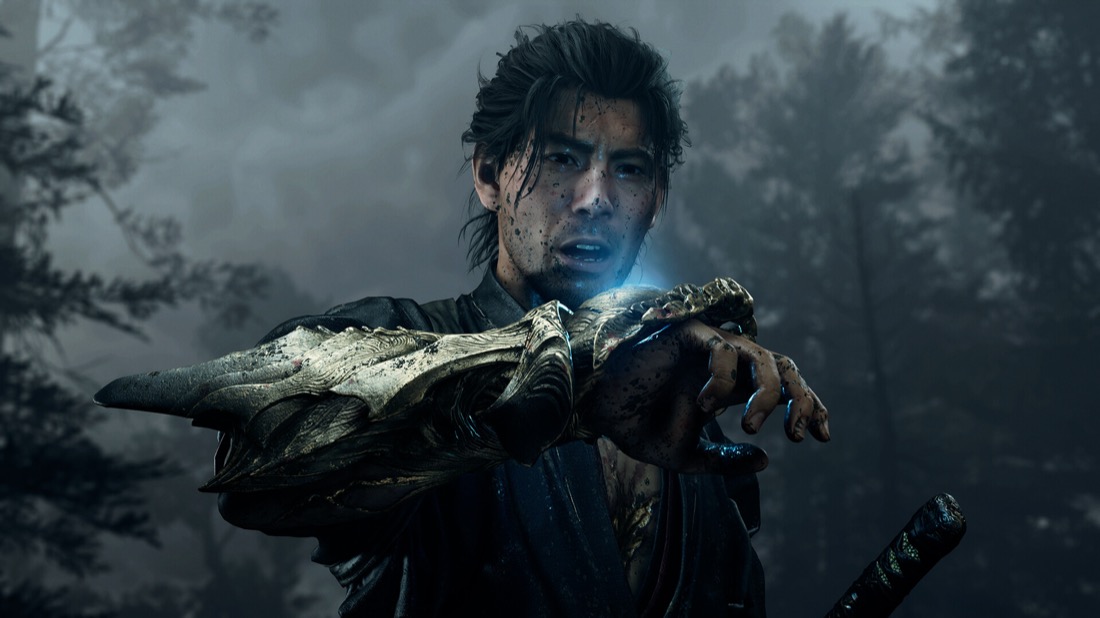
Image: Capcom
Onimusha: Way of the Sword launched on September 4, 2026 on PlayStation 5, Xbox Series X|S, Nintendo Switch 2 and PC, starting at $69.99. It is Capcom’s first new entry in the series in over two decades — the publisher’s own IR wording is “the first new title in the series in over 20 years” — and Capcom pulled the date three weeks earlier than originally announced. Capcom says it sold over one million copies globally on launch day.
Here’s the whole picture, updated five days after release: what it is, how it plays, how it landed, where it runs, and the handful of things Capcom still hasn’t said.
How it landed
Critics were close to unanimous. OpenCritic: a Top Critic Average of 86, with 95% of 119 counted critics recommending it. Metacritic splits by platform — Switch 2 89, PS5 85, PC 83, Xbox Series X 83 — with IGN at 10/10, Forbes 9/10, GameSpot 8/10, Eurogamer 4/5 and PC Gamer 83. Video Games Chronicle is the low outlier at 60, criticising filler.
The reservation is consistent and it isn’t the combat: it’s the semi-open-world Kyoto wrapped around it. OpenCritic’s consensus text calls that structure “a misstep that doesn’t justify its existence” while still calling the game “a fantastic and welcome return”; PC Gamer flagged pacing. Wikipedia describes the shipped game as largely linear with open areas and side content. So the honest read is critics loved the swordplay and were lukewarm on what surrounds it — not that opinion was divided.
Players broadly agree. Steam’s all-time review summary on September 9 was Very Positive — 9,957 positive of 11,236 reviews (88.6%), and recent reviews were higher still at 93.6%. SteamCharts logged an all-time concurrent peak of 76,061 (a SteamDB figure syndicated into Steam’s news feed reports 85,081 on September 6 — the trackers sample differently). The game was #2 on Steam’s Global Top Sellers for the week of September 1–8.
The two loudest complaint threads on Steam are a value argument (“$70 for 20 Hours though?”) and PC stability — see the known-issues note further down.
What it is
Capcom develops and publishes. Its own genre label is “Swordplay Action”; Steam files it under Action / Adventure / RPG. Every storefront lists it as single-player only, so there’s no co-op, multiplayer or cross-play to discuss. Ratings are firmly adult: ESRB M, PEGI 18, CERO Z, USK 18.
You play Miyamoto Musashi, and the standout production credit is the face: Capcom secured the likeness of the late Toshiro Mifune through Mifune Productions to model this Musashi. Producer Akihito Kadowaki is confirmed first-party via his PlayStation.Blog byline; director Satoru Nihei and the RE Engine attribution both come from interviews rather than any Capcom-owned page. Game Informer’s July 2026 interview cites roughly six years of development.
One number to untangle, because you’ll see both quoted: Capcom’s game site says the series has sold over 8.7 million units as of September 30, 2024, while Capcom’s July 2, 2026 IR release says sales exceed 9.1 million as of March 31, 2026. Both are first-party and neither is wrong — they’re different as-of dates. The 9.1 million figure is the newer one, and it predates this game’s own million-copy launch day.
The setup: Kyoto, Malice, and a gauntlet Musashi doesn’t want
The setting is early Edo-period Kyoto, twisted by Malice — note the spelling, since Capcom’s English pages say “Malice” where older coverage sometimes says “miasma,” the word used in Capcom’s French, Italian and German localizations.
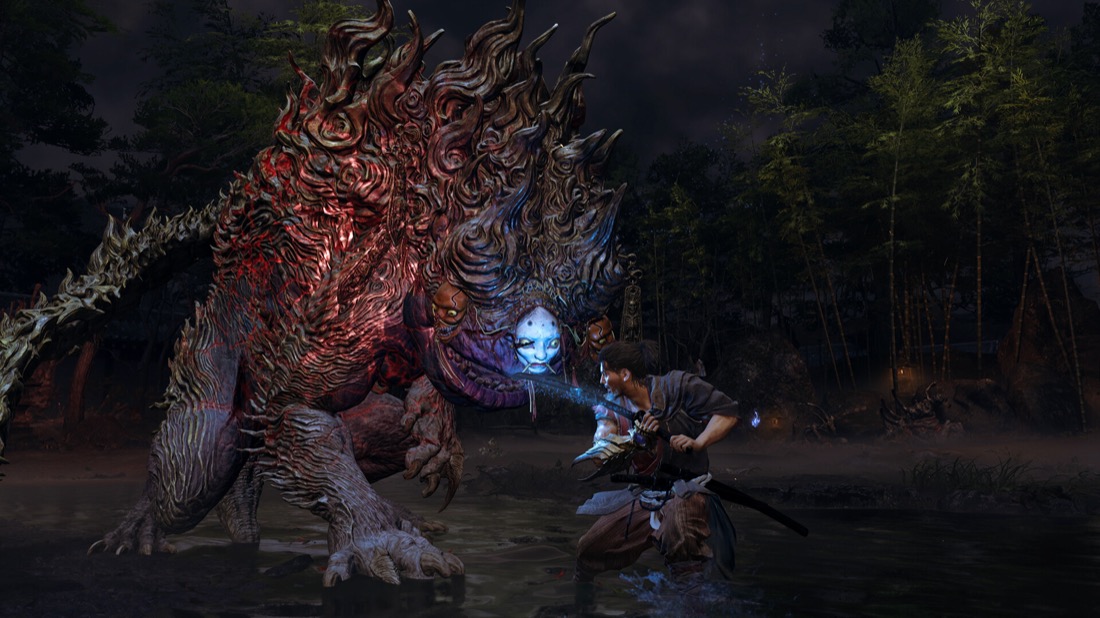
Musashi arrives to master the way of the sword and prove himself a warrior without equal. He’s set upon by the Genma, demons the Malice has dragged out of hell into the living world, and only an Oni Gauntlet lets him stand against them. That’s the hook: to Musashi the way of the sword is walked on one’s own strength alone, and he wants the thing off.
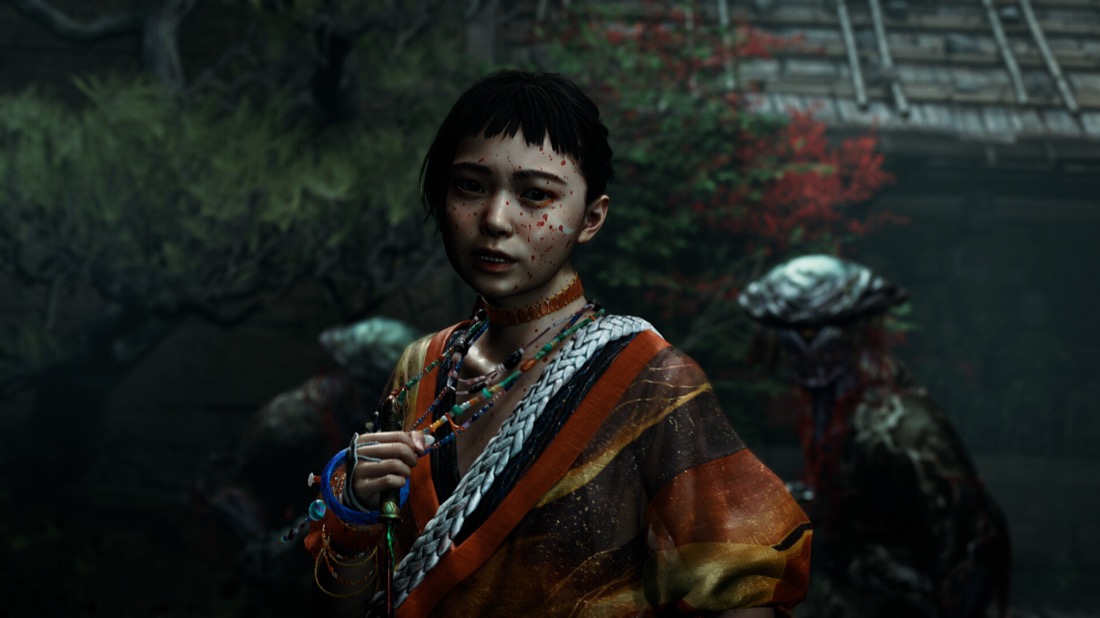
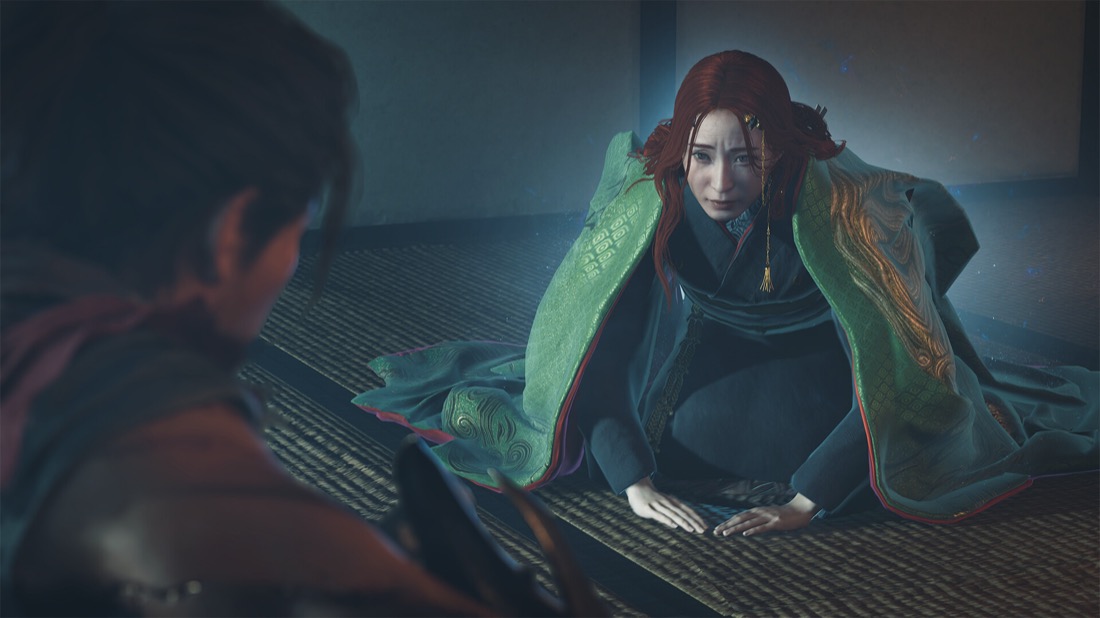
The revealed cast is small. The Oni Lady is a female Oni housed inside the gauntlet. Ono no Takamura is an aged master swordsman who also appears to carry one. Izumo no Okuni is a Kabuki dancer seeking power against the Genma. And Sasaki Ganryu — Sasaki Kojiro — is Musashi’s rival, and appears to wield a gauntlet too. Capcom’s boss category is “Formidable Foes,” and revealed locations run from Kiyomizu-dera Temple to Mount Oe and Yasui Konpiragu Shrine.
Capcom withheld the answers on purpose — who the voice in the gauntlet belongs to, why Ganryu and Takamura carry gauntlets, where the Dark Mass visions lead — and this page won’t spoil the shipped game’s answers.
What we can now state plainly is the shape of it. The game is built from numbered, named Missions rather than chapters or acts, and guide coverage does not agree on the total — Maxroll’s walkthrough index implies 24, other sites count 21 or 22 depending on how the opening and finale are tallied, so treat any single number with suspicion. The final mission returns to Rendaino, where the game opens, and it is fenced off by an explicit point-of-no-return prompt; free roam runs right up to that prompt, and after the credits “Continue” drops you back just before it for cleanup. There are 18 boss encounters and 274 collectibles in 11 categories, including 18 side missions Capcom calls Chance Encounters.
The Oni Gauntlet and soul absorption
The gauntlet is the spine of the design. It absorbs the souls of defeated Genma and converts them into a power source — and absorbing is a real decision, not a free pickup, because Musashi can move while absorbing but is otherwise defenseless. Yellow Souls restore health, Blue Souls fill the Oni Power gauge that fuels Oni Armaments, and Red Souls are spent to enhance equipment and to learn or enhance abilities.
Capcom documented three soul colours before launch. The shipped game has a fourth: purple souls, which fill the gauge for Oni Awakening — a transformation Capcom barely mentioned pre-launch. Click both sticks with the gauge full and Musashi becomes immune to health and stamina damage (incoming hits drain the gauge instead), Issen gets easier to land, souls auto-collect, and an Onimusha Onslaught super opens up on RB. PowerPyx’s advice for the hardest difficulty is not to burn it the instant it fills.
Musashi also gradually awakens Oni Abilities that serve exploration as much as combat: Oni Vision (reveals hidden Genma obstacles, drives puzzles), Oni Strength (breaks enemy defenses, opens paths) and Oni Agility (acrobatics, including running along certain walls).
The upgrade economy that pre-launch material only implied is now visible in full. Three currencies — Red Souls, Power Stones and Oni Stones — feed three enhancement tracks with different payoffs: clothing raises Health and Stamina, the sword raises attack, Issen and Oni power, and the gauntlet raises Oni Power capacity and soul-absorption range. The gauntlet is the one that gates how much you can actually use your Armaments. PowerPyx catalogues 30-plus Basic and Special Skills, several of which — Petrify, Assassination/Stealth, Flat-Out Sprint, Charm Capacity — never appeared in Capcom’s pre-launch material at all.
On puzzles: director Satoru Nihei said on the record that the series’ puzzle boxes are gone, replaced by environmental puzzles built into the stages, “introduced as a way to break up the action.” The shipped game bears that out. If you find a page explaining a Way of the Sword “puzzle box magic square,” it is describing Onimusha: Warlords from 2001.
Combat: Issen, and everything built around it
The series-signature mechanic returns, and it works exactly as Capcom described it. Issen is an attack input, not a parry follow-up: press attack the instant before an enemy’s hit lands. The timing is unforgiving; success avoids the damage entirely, kills ordinary Genma outright and takes a heavy bite out of a boss. Launch-week guides claiming Issen only opens after a clean gauntlet parry are wrong.
Two named variants: Break Issen, opened up by draining an enemy to exhaustion — against bosses you pick a body part from an on-screen prompt, where purple targets yield more souls and red targets deal more damage, shattering armour or severing limbs — and Chain Issen, started by pressing attack just as an Issen lands, to sweep through several enemies. Both are upgradeable skills rather than fixed abilities, so the windows and follow-ups change over a playthrough. Widely circulated frame counts for the Issen window come from guide sites that also carry outright fabrications about this game; treat them as unverified.
Around that sits a defensive toolkit with names that are easy to confuse:
| System | What it does |
|---|---|
| Parry | Block on time to unbalance an enemy — potentially crashing them into walls or other enemies, which drains stamina hard |
| Blazing State | Triggered by enough parries; boosts blade power and generates more blue souls |
| Deflect | Repel an attack off your blade, draining stamina and sending ranged attacks back at their source |
| Evade / Reflex Dodge | A perfect evade avoids all damage and enables a stamina-draining follow-up; perfect-evading a grapple gives a grab reversal |
| Reflex Combo | Chain Reflex Dodges to unleash a devastating combo |
| Blade Barrage | Triggered when blades collide; started from a One-Handed Attack, you must finish with a Two-Handed Attack, and vice versa |
| Blade Lock | Occurs on some parries and deflects; mash the input to win the benefits of both |
Offense splits into swift One-Handed Attacks and heavier Two-Handed Attacks, plus the chargeable Oni Bow and Environmental Objects — tatami mats as shields, carts rammed into enemies. Bosses die to stamina pressure rather than raw damage: deflects and Issen counters chip the bar, and a broken bar opens a Break Issen.
Oni Armaments are the flashy tier, and Capcom announced three of them. The shipped game has seven. The three known in advance are The Two Celestials (paired blades whose hits release health-restoring yellow souls), Earth-Shakers (chargeable hammers that tear through stamina, shields and armor) and the Wind-Whipper (a naginata whirlwind that negates ranged attacks). The four that were not: the Oni Bow, reclassified as an Armament rather than just a core action, plus the Firebird Flute (sets enemies ablaze), The Flashing Void (a high-damage charge attack) and Still Water (buffs attacks; its Golden Wave finisher spills extra purple souls, feeding Oni Awakening). Only the Oni Bow and Wind-Whipper are unmissable story pickups — the other five are optional finds, and collecting all seven earns the Oni Armory trophy. Maxroll rates The Two Celestials the best starter and the Wind-Whipper the most versatile.
Difficulty is now settled, and there are three, not two. Pre-launch, “Story Mode” and “Action Mode” came from an Xbox Wire interview rather than a Capcom page. Shipped: Story and Action are selectable from the start, and Carnage is a third tier unlocked by finishing the game and playable only through New Game+. It cannot be changed mid-run, and it is mandatory for 100% — it gates the gold trophy “True Onimusha,” which is why the platinum needs two playthroughs. Carnage also force-disables Action Prompts, which is why PowerPyx’s most useful piece of first-hour advice is to turn them off immediately and learn attack timing yourself.
New Game+ carries over Revival Mirrors, healing supplies, Charms, skill upgrades and awakened abilities, Hozuki Pouches, Genma Notes and Lion Dogs. It does not carry equipment enhancements, Mysteries of Kyoto, Chance Encounters or clothing — so you enter Carnage with your skills but not your gear tiers.
Platforms, storefronts and price
Capcom’s own platform string is “PlayStation®5 / XBOX Series X|S / Windows / Steam® / Epic Games / Nintendo Switch 2.” Read it carefully: PC ships on three separate storefronts — Steam, the Epic Games Store and the Microsoft Store. Four storefronts published verifiable pricing, and it’s identical across all of them:
| Edition | USD | JPY (MSRP, tax incl.) |
|---|---|---|
| Standard | $69.99 | ¥8,990 |
| Deluxe | $79.99 | ¥9,990 |
| Premium Deluxe | $89.99 | ¥10,990 |
Japanese MSRP is the same for digital and physical, and no physical price has been published outside Japan. Epic is the gap: Capcom links to a listing there, but nothing on that page has been independently verified.
Release date: September 4 — and why Steam said September 3
Capcom’s official date was Friday, September 4, 2026 on all platforms, with a 04:00 UTC unlock instant confirmed by two first-party storefronts — the Microsoft Store display catalog, and the PlayStation Store US page, which displayed “9/4/2026 04:00 AM UTC” outright. The launch went ahead on that date, on every platform, with no slip.
Steam showed Sep 3, 2026, and Steam wasn’t wrong: 04:00 UTC is 9:00 PM on September 3 in Pacific time, Steam’s reference zone. Both strings described the same moment. PlayStation, Nintendo and Microsoft all showed September 4.
The move-up is the other headline. Capcom originally announced September 25, 2026, then said on July 2, 2026 that it was pulling the date forward three weeks, crediting demo feedback. One casualty: Switch 2 digital pre-orders were automatically cancelled, and Capcom told affected buyers to place a new one on the eShop. No equivalent notice existed for any other platform. Our release date and unlock time guide has the regional conversions.
Editions in brief
The Deluxe Kit is cosmetics plus three charms; the Premium Deluxe Kit adds haori, outfits for Okuni and the Oni Lady, and a five-track in-game mini digital soundtrack. The detail that matters most: nothing in any edition is a confirmed permanent exclusive. Capcom’s own footnote says the kit contents will also be obtainable separately later, and the eShop already lists 19 individual paid DLC items matching them. Pre-order items — the Lion Dog charm, the Sealed Curse sword appearance, plus White Monkey and White Lion higher up — carry a softer note: they may be made available by other means after launch. Charms strengthen Musashi’s abilities; sword appearances are purely cosmetic.
Because the release moved up, the pre-order bonus became an Early Adopter Bonus (Capcom’s UK site calls it an Early Purchase Bonus — same offer, different locale wording), and it is still claimable: the wording is “pre-order or acquire,” so buying now, before the deadline, still earns it. That deadline is September 24, 2026 for PS5, Xbox, Windows and Switch 2, and September 25 for Steam and Epic. Be warned that Capcom’s own pages give two different console/Windows deadlines: “11:59 PM local time” on one, “11:59PM EDT / 8:59PM PDT” on another. Our editions and pre-order bonus guide unpicks that. There is still no Collector’s Edition and no season pass announced — not ruled out, just not announced.
PC requirements in brief
Windows 11 at every tier, 16 GB RAM across the board, DirectX 12, and 50 GB with an SSD required. Capcom publishes a four-tier table (Minimum / Recommended / High / Ultra) that Steam doesn’t show, topping out at a GeForce RTX 4070ti or Radeon RX 7900 XT for 4K/60.
The most misread thing on that sheet: all four tiers assume upscaling. Capcom’s “(using upscaling)” clause appears on every row, and no native-resolution figures are published anywhere. Super Resolution runs on NVIDIA DLSS 4.5 and AMD FSR — though Capcom’s products page and Steam say FSR 3.1 while Capcom’s own benchmark page says FSR 4, so the AMD version is genuinely unsettled between two first-party pages.
A free benchmark tool landed on Steam and Epic on July 14, 2026 (18 GB install), scoring from “Insufficient performance” up to “Excellent” at 25,000+. Note the PC build carries Denuvo Anti-tamper, with a five-machines-per-day activation limit. Full tables in our PC system requirements breakdown.
Platform differences
Capcom publishes a per-platform performance table. The Switch 2 rows are the best documented — Capcom’s page and RPG Site’s reporting agree on them:
| Platform / mode | Output resolution | Frame rate |
|---|---|---|
| PS5 / Xbox Series X — Performance | 3840 × 2160 (upscaled) | 60 fps |
| PS5 / Xbox Series X — Quality | not published | 30–40 fps |
| Xbox Series S — Performance | 1920 × 1080 (upscaled) | 60 fps |
| Xbox Series S — Quality | not published | 30–50 fps |
| Switch 2 — TV Mode | 1920 × 1080 (upscaled) | 30 fps |
| Switch 2 — Handheld Mode | 1600 × 900 (upscaled) | 30 fps |
A caveat: Capcom serves those values as a shared pool rendered per platform tab, and the PS5 / Series X / Series S row assignment rests on one outlet (Noisy Pixel), whose own table mislabels the Series S row. Quality-mode resolution is unpublished on every console.
Digital Foundry has since measured the shipped Switch 2 version, as reported by Nintendo Everything: an optional 30 fps cap with perfect frame pacing or an uncapped mode ranging 30–60 fps, up to 1080p docked (dropping to 720p or below in places), up to 900p handheld, dialled-back hair quality and a softer image than the other consoles, likely with DLSS in play. DF’s verdict was “another solid Nintendo Switch 2 port.”
That produces a clean buying rule. Switch 2 scored highest with critics (89) but is technically the lightest version; PS5 (85) is the one with a 60 fps performance mode; PC (83) is the riskiest right now on stability grounds. Buy Switch 2 for portability, PS5 for frame rate.
Switch 2 also has a genuine platform-exclusive feature: Joy-Con 2 motion controls, under Capcom’s heading “A play experience exclusive to Nintendo Switch 2.” Shake the right Joy-Con 2 horizontally for a One-Handed Attack, vertically for Two-Handed, hold ZR to aim the Oni Bow, shake both for Oni Strength: Destroy — button input still works. It also gets an optional variable 30–40 fps mode and is the only platform with a published install size, roughly 34 GB.
PS5 is listed as PS5 Pro Enhanced, with DualSense trigger effects and Remote Play, but what the Pro enhancement actually does is still not published — one outlet’s writer claims Pro-exclusive ray tracing from hands-on time, a single secondary claim. Xbox Series X|S and Windows support Xbox Play Anywhere: one Microsoft Store purchase covers both, saves included, though it doesn’t extend to Steam or Epic. Microsoft’s catalog flags RayTracing, 4K, HDR, VRR and Dolby Atmos at product level, which doesn’t say which SKUs or modes use ray tracing, and no Game Pass entitlement appears in that record. Cross-save between platforms was never announced.
Steam Deck is now rated: Steam Deck HQ calls it Playable and ProtonDB has it at Gold, at a 30 fps cap on default settings — the reviewer advises against tuning, since custom adjustments “yield minimal improvement and reduce stability.” Measured: mostly solid 30 fps, 13–20 W, 65–75 °C, 2.5–3 hours of battery. Do not believe a “Steam Deck 60 fps settings” page. The Deck’s problem area is the Eastern Kyoto hub, where CPU spikes cause stuttering — the same area desktop players report traversal stutter in.
Known issues five days in
Two things are worth knowing before you buy on PC.
Crashes. Capcom’s own Customer Service Center runs a pinned troubleshooting thread on Steam that acknowledges crashes during gameplay and on exit, frame-rate instability, shader optimisation delays, black-screen startup failures and cutscene playback problems, with a 17-step checklist — antivirus exclusions for the game and Steam folders, GPU drivers at NVIDIA 596.49+ or AMD 26.5.1+, deleting shader.cache and shader.cache2 from the install folder, the Microsoft Media Feature Pack for cutscene issues. Crash reports are written to a CrashReport folder in the install directory, which is what to attach when reporting one. The blunt version: as of September 9 there is no shipped PC patch and no Capcom ETA for one, the largest crash thread on the Steam hub has no confirmed universal fix, and plenty of players report 7–12 hours with no crashes at all — which points at a driver or hardware interaction rather than a defect everyone will hit.
One reported progression blocker. Two Steam users posted on September 8 describing the same failure during Okuni’s Kabuki Dance sequence: you take a boat to a small island, and if you die or crash there before activating the island’s Spirit Mirror, you respawn on the mainland and the boat does not return, with no way to advance. This is player-reported and not Capcom-confirmed, and no workaround has been posted. The preventative step is cheap: take a manual save before boarding the boat, and activate the Spirit Mirror the moment you land.
The demo, and the save file you shouldn’t delete
The free Onimusha: Way of the Sword DEMO launched June 2, 2026 on PS5, Xbox Series X|S, Steam and Epic — Capcom’s IR release dates it June 3, the same instant in JST. It covers the Kiyomizu-dera Temple stage, roughly 30 minutes of early story per Kadowaki, and includes a duel with Sasaki Ganryu, with parry, deflect, Issen, soul absorption and one Oni Armament available.
Demo progress does not carry over — Capcom is explicit that you can’t continue from demo save data. Keep the save anyway: hold onto it and you can claim a Charm: Kubi Akari in the full game, via the Spirit Mirror, which unlocks as the game progresses rather than at minute one. The Windows version of the demo was listed as coming “at a later date” and never appeared before release; with the full game out, the point is moot.
Timeline: how we got here
| Date | What happened |
|---|---|
| December 2024 | Revealed at The Game Awards, dated only “2026” (secondary) |
| June 2026 | Switch 2 version announced in a Nintendo Direct (secondary) |
| June 2, 2026 | Demo launches; September 25 date announced on PlayStation.Blog |
| June 13–14, 2026 | Capcom’s console resolution and frame-rate table surfaces |
| July 2, 2026 | Date moved up to September 4; Switch 2 digital pre-orders auto-cancelled |
| July 14, 2026 | Free benchmark tool released on Steam and Epic |
| August 14, 2026 | Switch 2 file size (~34 GB) surfaces from Japanese display boxes |
| August 16–17, 2026 | Character video series launches, narrated by the Oni Lady’s voice actor |
| September 4, 2026 | Released, 04:00 UTC unlock; Capcom announces one million copies sold on launch day |
| September 6, 2026 | Steam concurrents peak (76,061 per SteamCharts; 85,081 per SteamDB) |
What Capcom still hasn’t said
Most of the pre-launch gaps have closed. Playtime is answerable now (roughly 20 hours for the story, 60–70 for the platinum), New Game+ and Carnage exist, Steam Deck is rated Playable, and the trophy list runs to 52. A few things never got answered, and some of them never will:
- Review embargo. No embargo date was ever published or reported. Reviews landed at launch regardless — OpenCritic counted 119 of them.
- Preload. No preload window or size was ever announced on any platform. That question is now closed by the game being out.
- “Gone gold.” Capcom never made a gold announcement. The game shipped on its rescheduled date anyway.
- PS5 and Xbox install sizes. Still unpublished. Only the Switch 2 figure (~34 GB) is first-party; Steam’s 50 GB “available space” measures something different.
- A PC patch. None shipped in the first five days, and Capcom has given no timing.
- Photo mode, a roadmap, or a season pass. Still nothing announced. The 19 individual DLC SKUs on the eShop are the Deluxe and Premium kit items sold separately, not a season pass.
- What “PS5 Pro Enhanced” actually does. The badge is on the store page; the enhancement has never been described.
One last warning, because the launch week produced a lot of it: a cluster of guide pages describe Onimusha: Warlords (2001) mechanics as though they were in this game. There is no Fluorite in Way of the Sword, no puzzle boxes, and no Dark Realm, and Rasho-gan is a Mission 5 story boss rather than an optional superboss. If a page mentions any of those, close it.
Frequently asked questions
When did Onimusha: Way of the Sword come out?
September 4, 2026, on PS5, Xbox Series X|S, Nintendo Switch 2 and PC — three weeks earlier than the September 25 date Capcom announced first. The global unlock instant was 04:00 UTC, which is why Steam displayed September 3.
Is Onimusha: Way of the Sword any good?
Yes. Metacritic sits at 89 on Switch 2, 85 on PS5 and 83 on PC and Xbox Series X; OpenCritic has a Top Critic Average of 86 with 95% of 119 critics recommending it. Steam reviews are Very Positive. The near-universal reservation is the semi-open-world Kyoto structure, not the combat.
How long is Onimusha: Way of the Sword?
Capcom has still never published a playtime figure. The main story runs around 20 hours. PowerPyx puts the platinum at 60–70 hours over a minimum of two playthroughs, because the Carnage difficulty needed for 100% unlocks only in New Game+.
Does the Onimusha demo save carry over to the full game?
No. Capcom states you cannot continue from demo save data in the base game. But keeping the demo save earns you a Charm: Kubi Akari in the full game, claimed in-game via the Spirit Mirror.
Is Onimusha: Way of the Sword on Game Pass?
No. No Game Pass entitlement appears in the Microsoft Store catalog record — the game is sold at full price. Capcom has not made any statement about Game Pass either way.