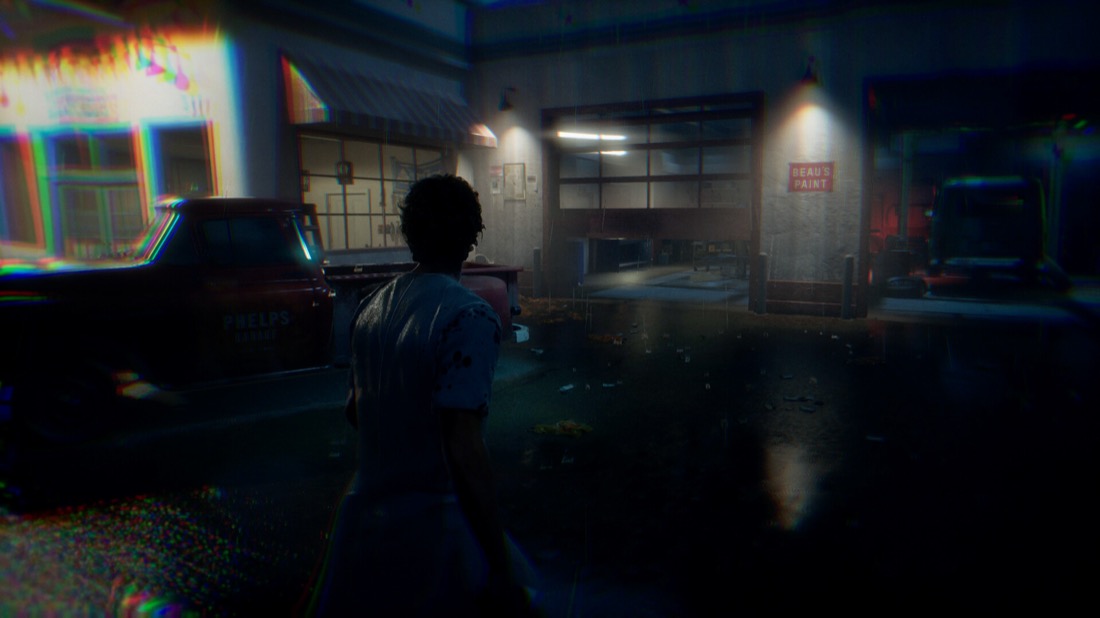
Control Resonant beginner tips
New to Control Resonant? Here are the best early priorities for Dylan Faden, including abilities, resources, and what to focus on first.

Image: Remedy Entertainment
If you’re starting Control Resonant, the best early advice is simple: learn Dylan Faden’s combat rhythm, unlock abilities from Resonants whenever you can, and spend resources on progression that improves your build rather than chasing everything at once. You do not need to play Control first to understand the sequel, and Remedy frames this as a game that stands on its own.
What to focus on first
Control Resonant is built around Dylan Faden’s shapeshifting melee weapon, the Aberrant, plus supernatural abilities and progression systems that let you shape how he fights. In practical terms, that means your first hours should be about getting comfortable with the weapon’s forms, using newly unlocked powers, and building toward a loadout that fits how you want to play.
The core loop is not complicated, but it is layered. Remedy says defeating Resonants unlocks brand-new combat abilities for Dylan, which makes them a major early priority. If you’re deciding what to tackle next, hunting Resonants and then testing the abilities they grant is the clearest way to grow stronger.
Learn the Aberrant early
The Aberrant is the centerpiece of the game’s combat. Remedy describes it as Dylan’s shapeshifting melee weapon that can transform into multiple forms, and the confirmed forms shown so far are Hammer, Blades, Scythe, and Fists.
That matters for beginners because Control Resonant is not about sticking to one weapon style and ignoring the rest. Steam’s own copy emphasizes that the Aberrant shifts on demand, letting you move between slower heavy hits and faster dual-wielded-style offense. Early on, your goal should be to learn how each form feels and which one helps you survive specific encounters.
A good rule for the first hours:
- Use the Hammer when you need heavier hits.
- Use Blades and Fists when you want faster pressure.
- Treat Scythe as another confirmed option to explore once it opens up.
Remedy has also confirmed that more Aberrant forms exist beyond what has been shown, so don’t assume the early set is the whole toolkit.
Prioritize abilities from Resonants
If you want the clearest early power spike, focus on Resonants. Remedy’s explanation is direct: these boss-type enemies are corrupted remnants of powerful individuals, and beating them grants Dylan new combat abilities.
That makes the game’s progression feel less like simple leveling and more like a reward loop tied to the world itself. In the opening hours, whenever a Resonant is available, it should be high on your list. The more of them you defeat, the more tools you’ll have to handle later fights.
Two named abilities have been confirmed so far: Reach and Shift. Steam also references elemental abilities as part of Dylan’s kit, though Remedy has not published a full ability list. Use that as a reminder that your build will grow over time, but the exact endgame toolkit is still not fully revealed.
Spend resources on the systems that carry you forward
Remedy has confirmed several progression systems, and early resource management should be aimed at the ones that give you the biggest long-term payoff:
- Talents with a talent-node tree
- Artifacts, which are equippable
- Aberrant upgrades
- Health and combat-ability resource improvements
For new players, that means you should avoid scattering upgrades too widely. When you get resources, lean toward upgrades that strengthen your combat identity instead of buying every small option you see. The game also supports pre-combat loadout creation, so planning your setup before a major encounter is part of the intended flow.
A simple early priority order is:
- Combat survival upgrades
- Ability upgrades
- Talents that support your preferred style
- Artifacts that fit the build you’re running
That is especially important because Control Resonant’s combat is not designed around a huge arsenal of separate systems. The strongest early results come from specializing.
Don’t ignore Artifacts
Artifacts matter early because Remedy confirmed they are a named progression system and that Dylan can equip them in slots. On a first playthrough, he has three artifact slots. In New Game Plus, that number rises to four.
For beginners, the practical takeaway is that Artifacts are not just optional flavor. They are part of how you shape Dylan’s strengths, and they become more valuable as your build stabilizes. If you find an Artifact that supports your preferred combat approach, keep it in mind rather than treating it as disposable loot.
Treat traversal like story progression
One of the biggest beginner mistakes would be expecting every ability to function the same way across the whole game. Remedy says traversal abilities are tied to story progression and do not carry over into New Game Plus.
That means you should use the mobility tools the game gives you as part of the intended route through the world, not as permanent universal powers. It also means some of Dylan’s progression is deliberately tied to where you are in the story, not just what you have unlocked.
Know what kind of world you’re in
Control Resonant is not an open-world game. Remedy describes it as a game built around large, distinct, expansive zones filled with side activities, hidden encounters, and optional discoveries, while still following a strong central narrative.
For beginners, that means exploration is worthwhile, but you do not need to approach every area like a giant sandbox. Move through zones methodically, watch for optional encounters, and keep the main story moving when a new area starts to open up.
The confirmed early zone named by Remedy is the West Incursion Zone. The game also includes Gravity Anomalies, where gravity and orientation shift entirely. Those are good reminders that the environment itself is a combat and traversal tool, not just a backdrop.
Should you play on PS5, Xbox, or PC?
From a beginner’s standpoint, the most important platform difference is that the PlayStation 5 Digital Deluxe Edition includes 48 hours of early access. That does not change the core game, but it does change when some players can start.
Otherwise, the game is confirmed as a single-player release with no multiplayer or co-op categories. If you are jumping in on PC, Steam lists full controller support and DualSense support; PlayStation Store also lists advanced difficulty customization among its accessibility features. Remedy has not published first-party performance mode targets, so console framerate details are still not confirmed.
Beginner priorities in one glance
| Priority | Why it matters |
|---|---|
| Learn the Aberrant | It is Dylan’s core combat weapon |
| Defeat Resonants | They unlock new combat abilities |
| Invest in Talents and Artifacts | These shape your build long term |
| Upgrade survival and combat resources | Strong early value for new players |
| Explore zones carefully | The game rewards hidden encounters and side activities |
| Don’t expect open-world structure | It is large-zone exploration, not an open world |
What not to worry about yet
You do not need to worry about the full ability list, every Aberrant form, or the complete zone structure. Remedy has intentionally held some of that back. You also do not need to assume New Game Plus is available at launch, because Remedy has not stated when it becomes playable.
For your first hours, the safest approach is to stay focused on the fundamentals: learn the weapon, defeat Resonants, build around Talents and Artifacts, and let Dylan’s abilities grow naturally as you advance through the story.
Frequently asked questions
Do I need to play Control first?
No. Remedy says Control Resonant stands on its own, even though it is a sequel. Playing the original Control can add context, but it is not required.
What should I prioritize early in Control Resonant?
Focus on learning Dylan’s core combat loop, especially the Aberrant and the abilities you unlock from Resonants. Early Talents, Artifacts, and resource upgrades are the most useful progression priorities.
Is Control Resonant open world?
No. Remedy describes it as large, distinct, expansive zones rather than an open-world game.
Does New Game Plus carry over everything?
No. Remedy says Aberrant upgrades, abilities, Talents, Artifacts, and certain resource improvements carry over, but traversal abilities do not.
Is the game single-player only?
Yes. Steam lists Single-player only, and PlayStation Store shows 1 player.